Instant Postgres Playground
A no-signup, zero-friction SQL environment backed by real Neon infrastructure. Try Postgres before you commit to anything.
Head of Design · Dec 2024
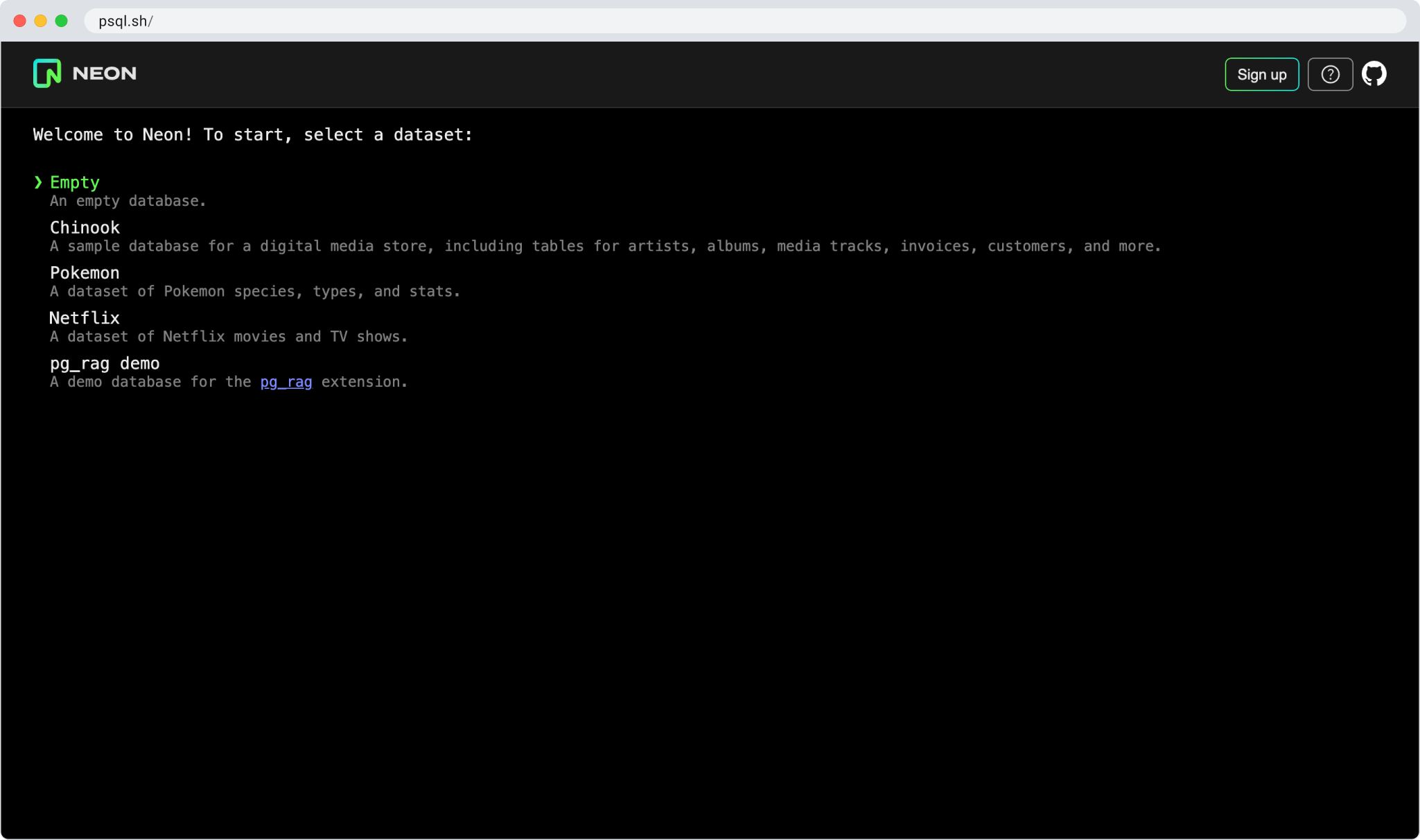
When I joined Neon as Head of Design, the product had a problem every developer platform eventually hits: it asked for commitment before it had earned it. Create an account. Verify your email. Go through onboarding. Maybe see something useful eventually.
I designed psql.sh. A live, browser-based SQL environment backed by real Neon infrastructure. No signup. No configuration. Open a tab and start writing queries.
The Problem
Most developer tools default to the same funnel: marketing page, signup form, onboarding checklist, maybe value eventually. Every step bleeds the people most likely to become power users.
For Neon, this played out at the top of the funnel. Developers evaluating alternatives. RDS, Supabase, PlanetScale. They weren't going to create an account just to see what serverless Postgres felt like. They'd move on. The product needed to be experienced before it could be sold.
The Solution
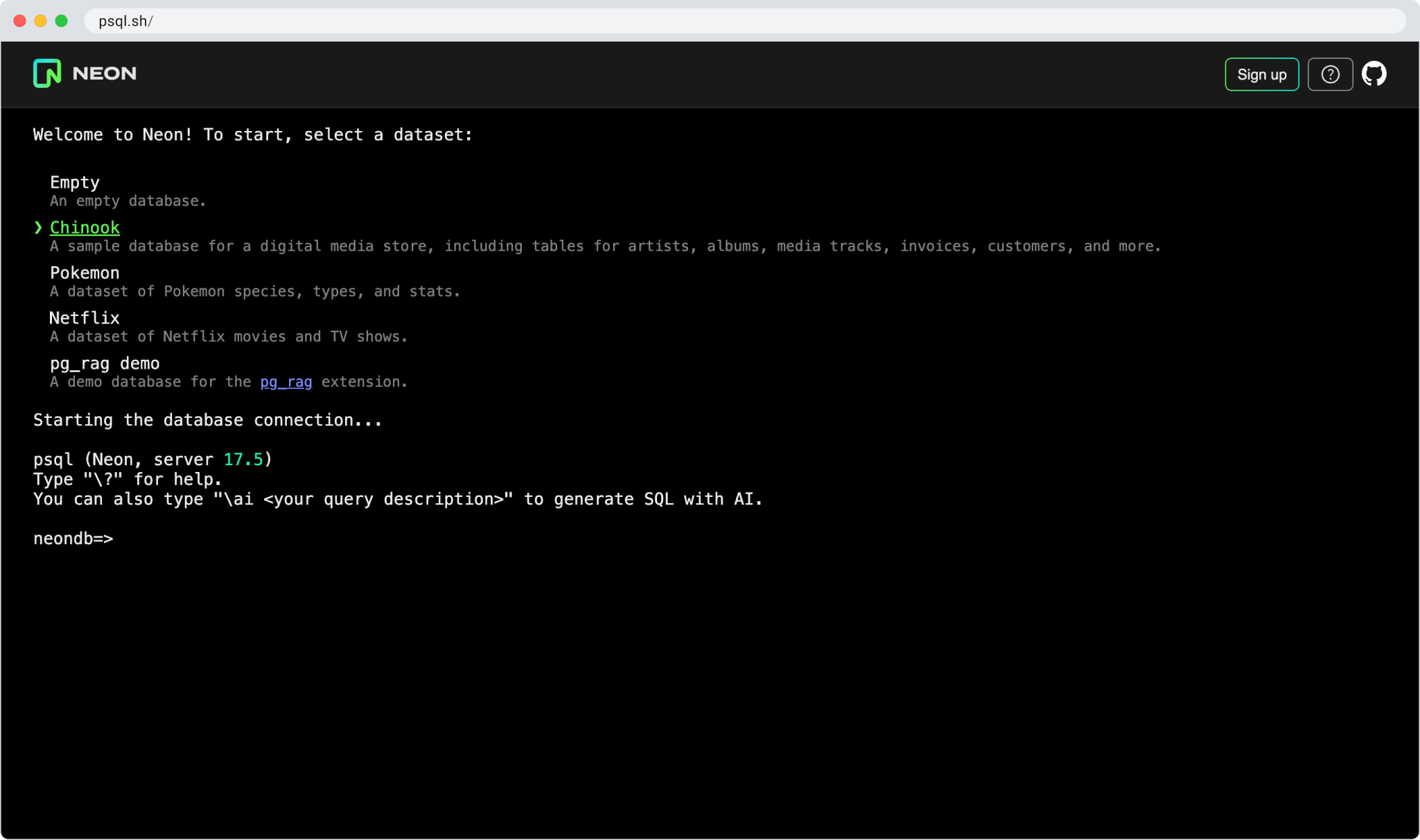
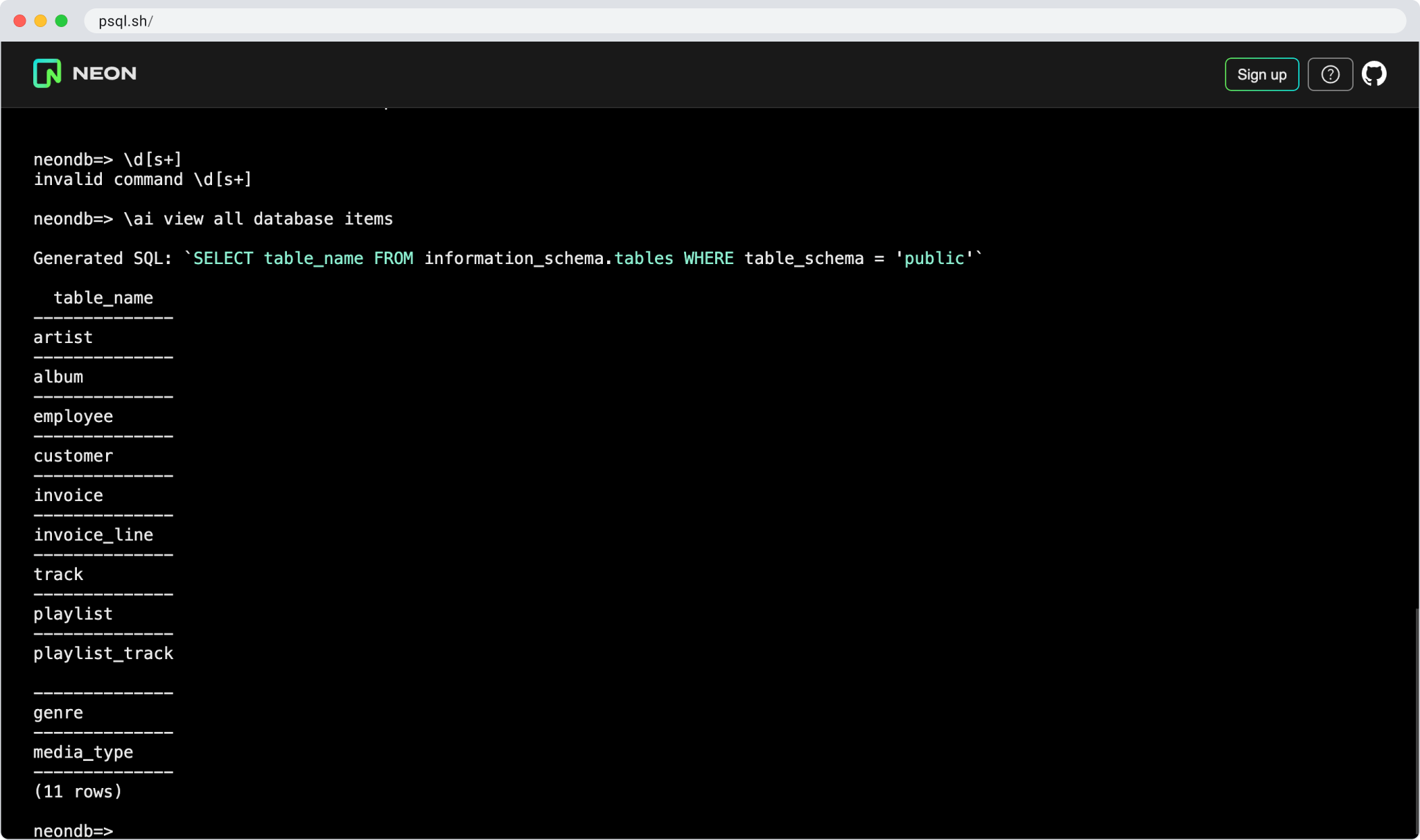
I pitched and designed psql.sh. An instant demo environment built on real Neon infrastructure. No signup. No configuration. A browser tab that drops you straight into a live Postgres session.
The environment came pre-seeded with a relatable schema and examples that demonstrated Neon's core differentiators: branching, autoscaling, and storage separation. Not documentation. Live commands you could run.
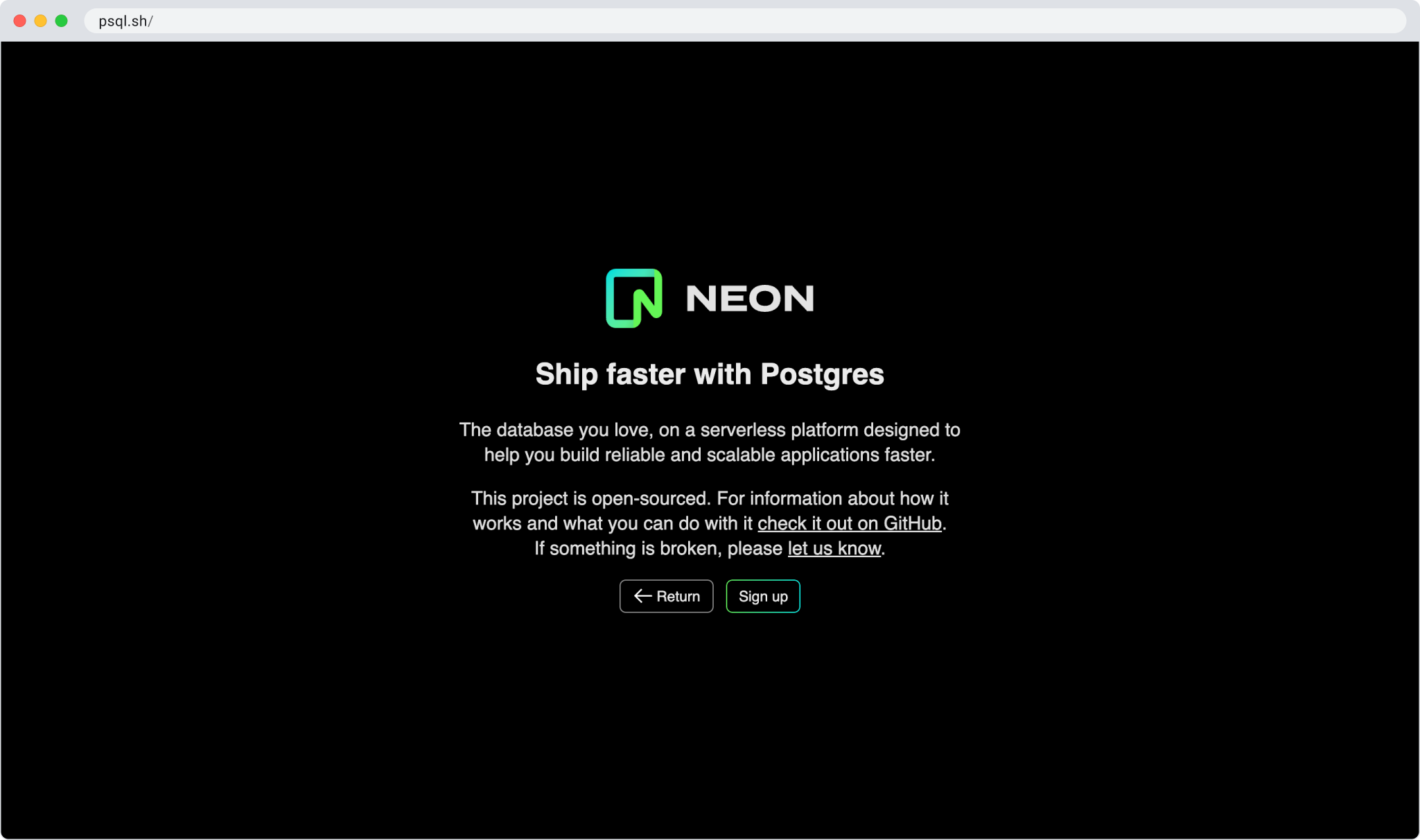
When a developer was ready to go further, a 'Continue in Neon' CTA preserved their demo session. Their work carried into a real account without starting over. The transition became the moment of commitment, not the entry point.
I also added /ai <prompt>. A natural-language SQL assistant for users who didn't want to write queries from scratch. Type what you want, get something that runs. It lowered the floor without touching the ceiling.
Outcomes
psql.sh launched in December 2024. In the first 60 days:
It also gave Growth and Marketing something they didn't have before. A shareable, low-friction entry point that worked in social posts, developer newsletters, and documentation without needing a sales pitch attached.
Learnings
Demo-first is the new doc-first. The instinct in developer tools is to explain before showing. This project inverted that. Show the thing, explain it when they ask.
The conversion data also surfaced something less obvious. When pricing tier differentiation is unclear, even strong UX hits a ceiling. The playground created intent. Converting that intent required pricing clarity downstream. Good UX surfaces the next problem to solve.