Domain Visibility
Making team boundaries legible inside invite flows to reduce workspace confusion.
Lead Growth Product Designer · Aug – Oct 2022
Collaborating with teammates should be intuitive. At Postman, the invite flow made it anything but. Teams were invisible to the people trying to build them, and the data showed it: 80% of teams had no visibility into who else was in their domain, and 95% of surveyed users didn't see the value of teams at all.
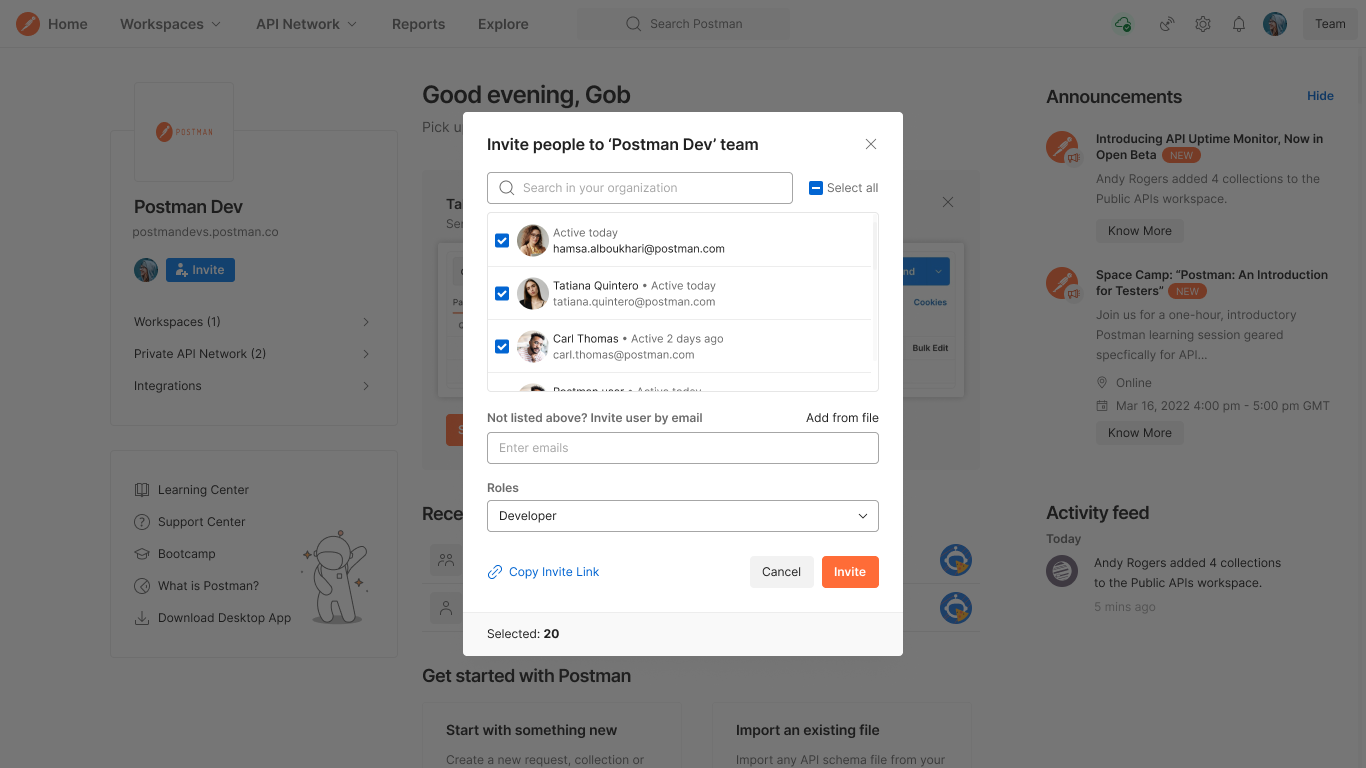
As Lead Growth Product Designer I redesigned the invite experience to surface domain members directly inside the flow, giving users a searchable directory of coworkers they could add in a few clicks. Shipped as a multi-variant A/B test in August 2022, GA'd in October 2022. It became the highest-impact Growth project of the year, contributing to Postman's $100M ARR goal.
The Problem
The value of a Postman team is centralized collaboration within the platform. But the data told a different story: teams were tiny, invisible, and mostly unused.
Qualitative findings
A heuristic evaluation and user surveying confirmed the friction users experienced when trying to collaborate:
User Flows
Based on research and market patterns, it was clear the way users shared and invited coworkers was not working. I spent a cycle analyzing existing flows beyond just team discovery, focusing on the fundamentals of how a user gets teammates onto their team. These flows became the foundation for all future work within the squad.
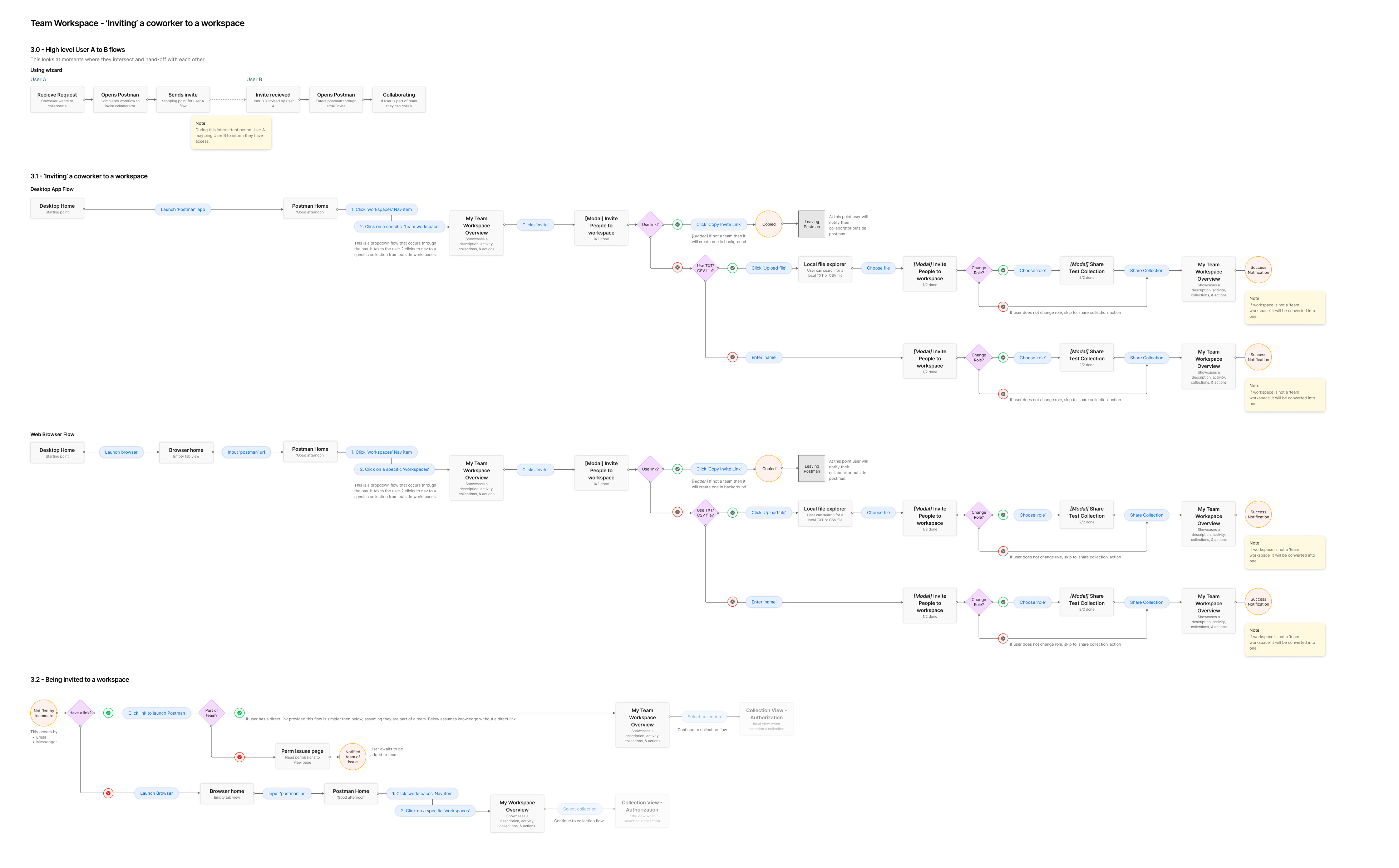
These flows showcase how user A can invite user B to their team and how B can accept an invite.
Before
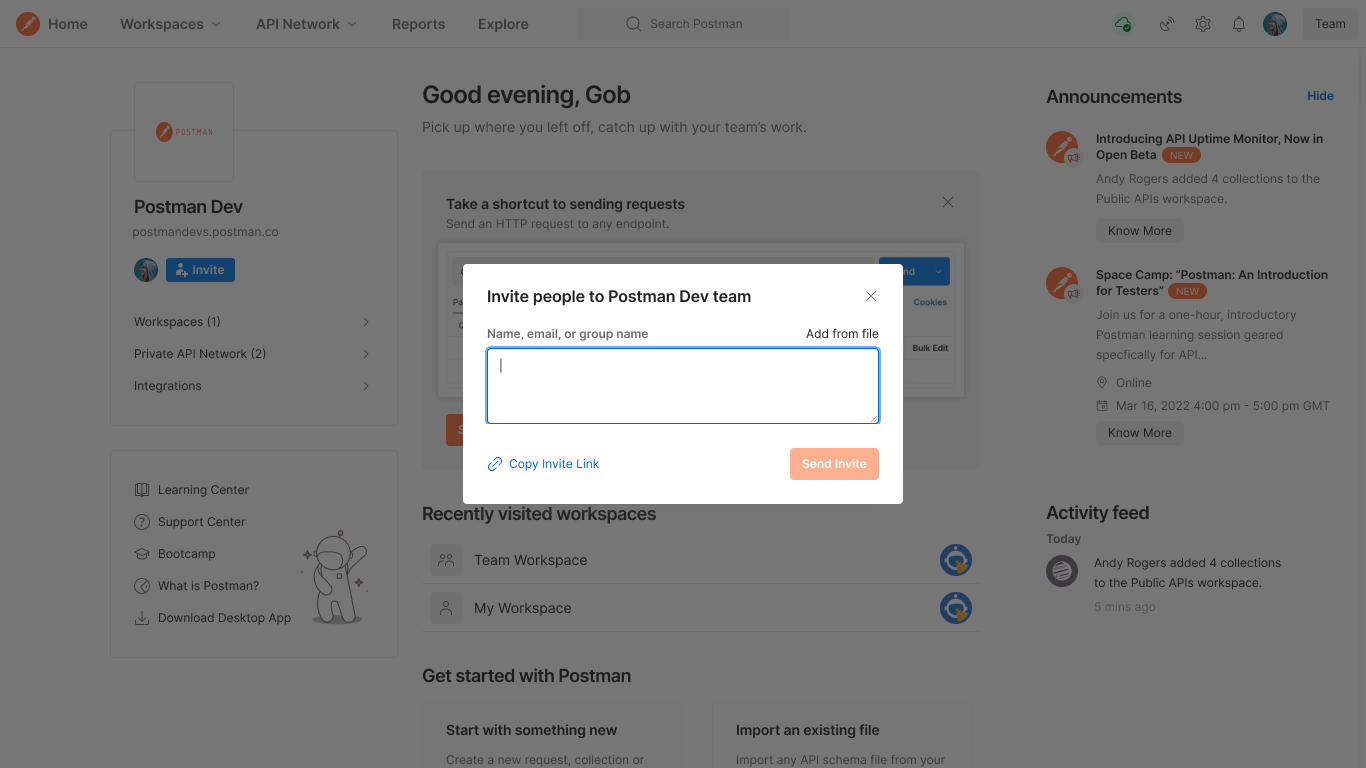
The original invite modal: no domain context, no suggestions, no directory.
The existing invite flow had no awareness of who else was in the user's domain. Users had to know exactly who they wanted to invite and type them in manually. There was nothing to help them discover collaborators, and no visibility into whether a coworker was already on Postman.
Market Analysis
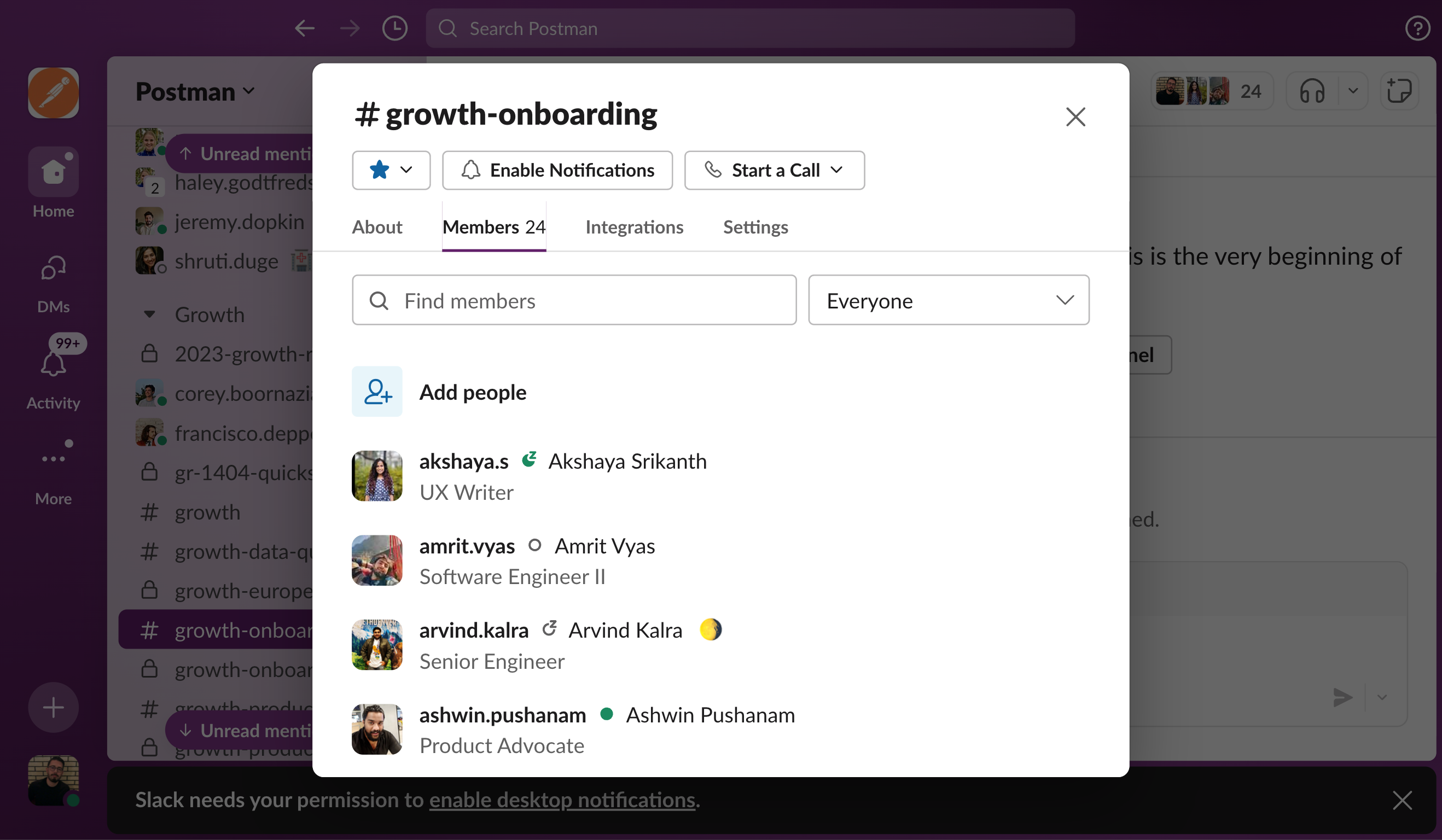
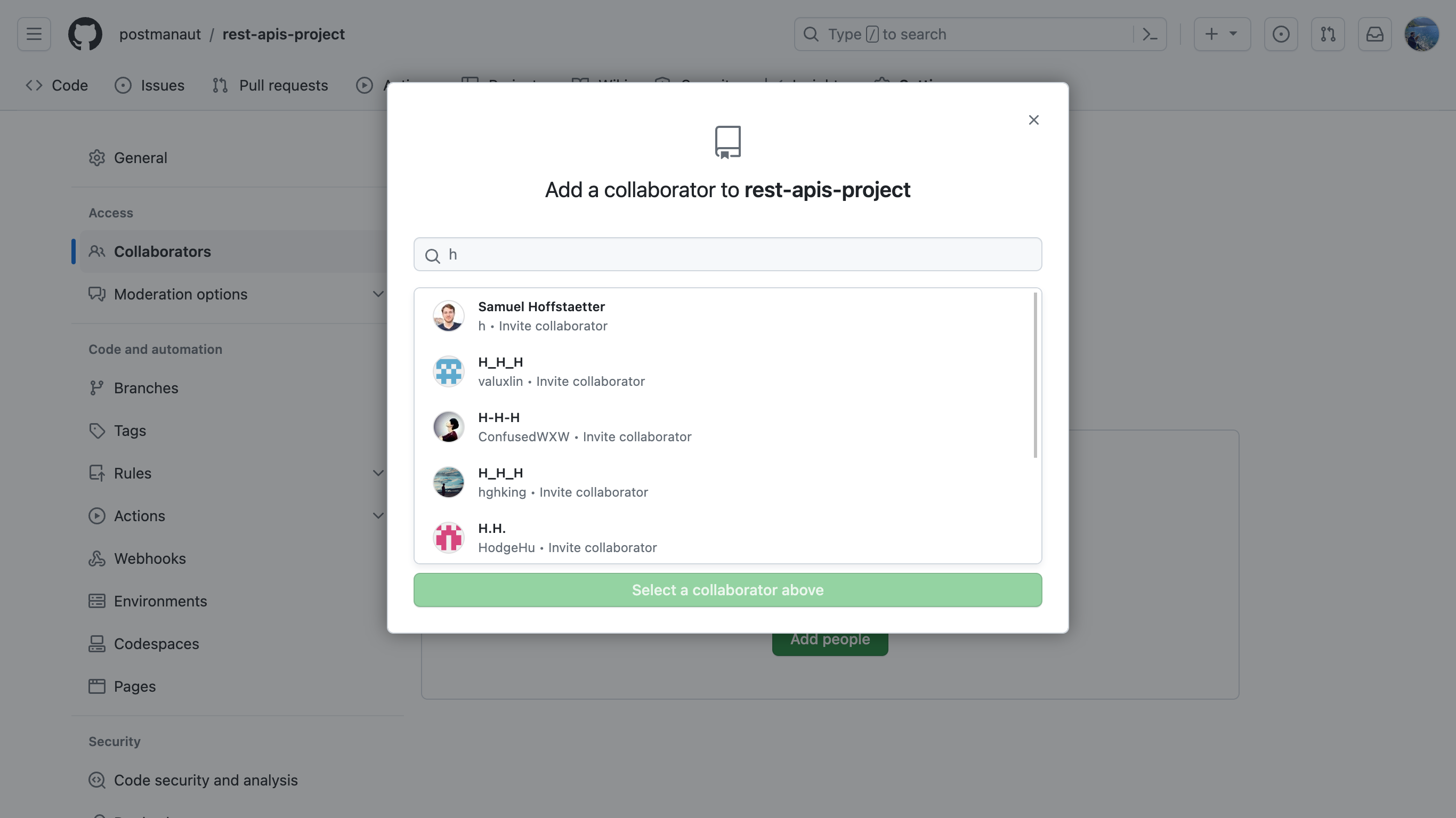
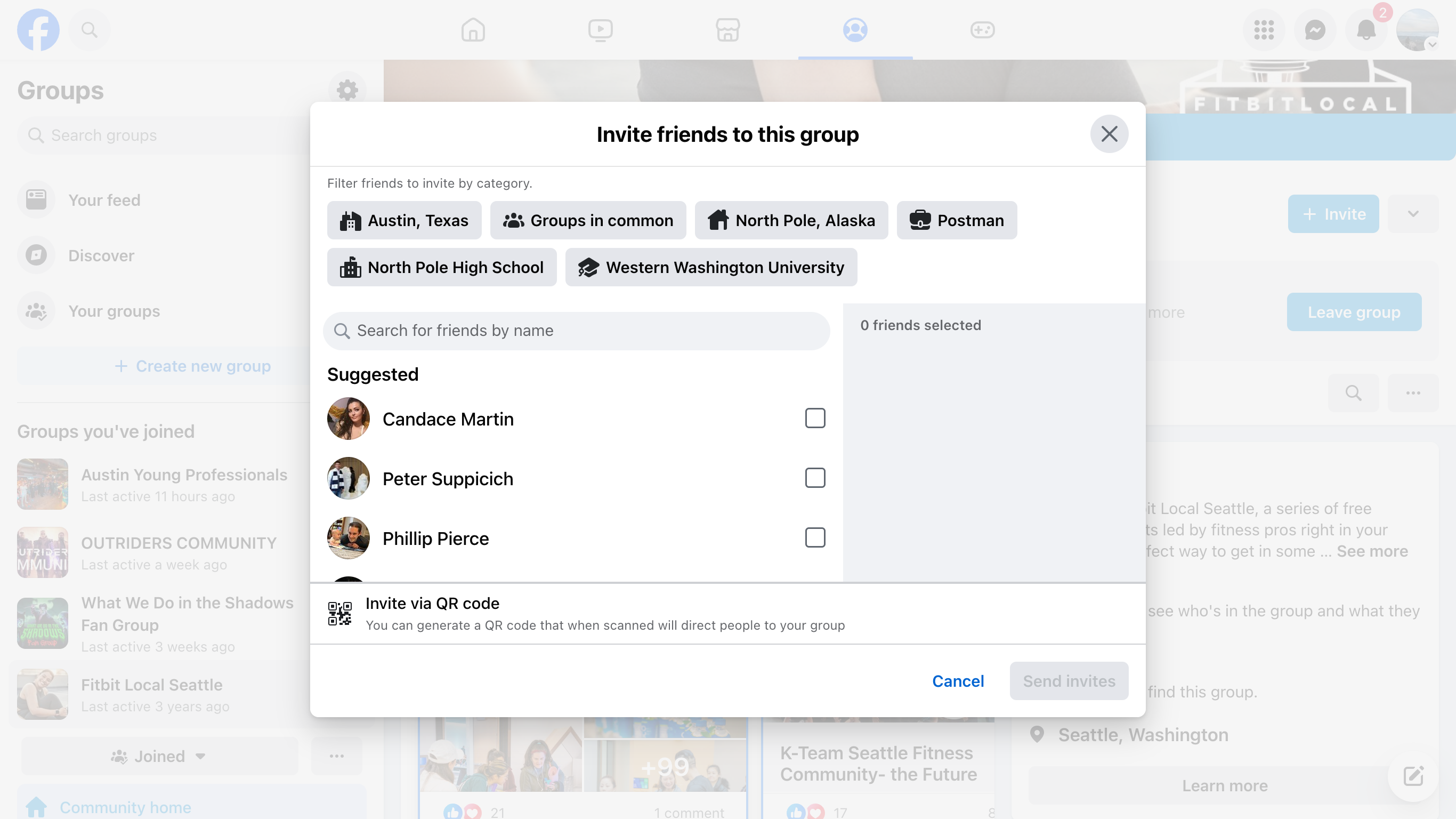
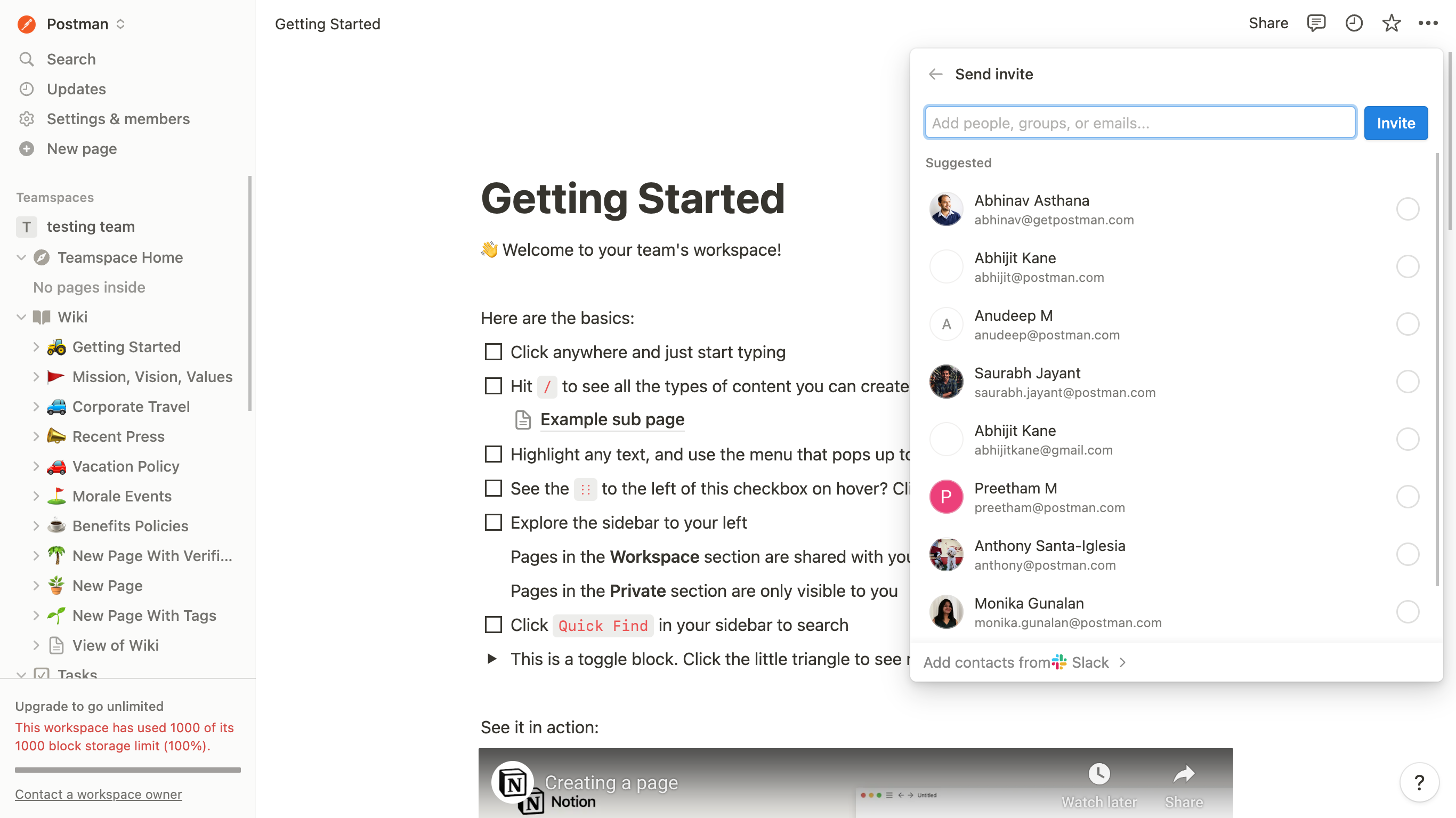
I investigated 8+ products to understand how other systems handle directory-based inviting and suggestive invites. Three patterns stood out:
Hypothesis
Providing Postman team members with a seamless way to discover and invite coworkers will lead to increased team size and paid license sales.
Goals
About 500 teams sent invites daily, with over 70% having domain users who weren't yet team members. If teams were exposed to all available users and invited just 2.5% more per day, that would add approximately 10 more accepted invites daily. Projected out: an MRR increase of $54K and ARR increase of over $600K.
User Goals
Business Goals
Low-Mid Fidelity
I explored approximately 12 variants, each focused on how to integrate a meaningful directory view and help users better decide who belongs on their team. As the explorations evolved, approaches became more refined as I worked to match the old world with the new. The work had a deep focus on:
High Fidelity
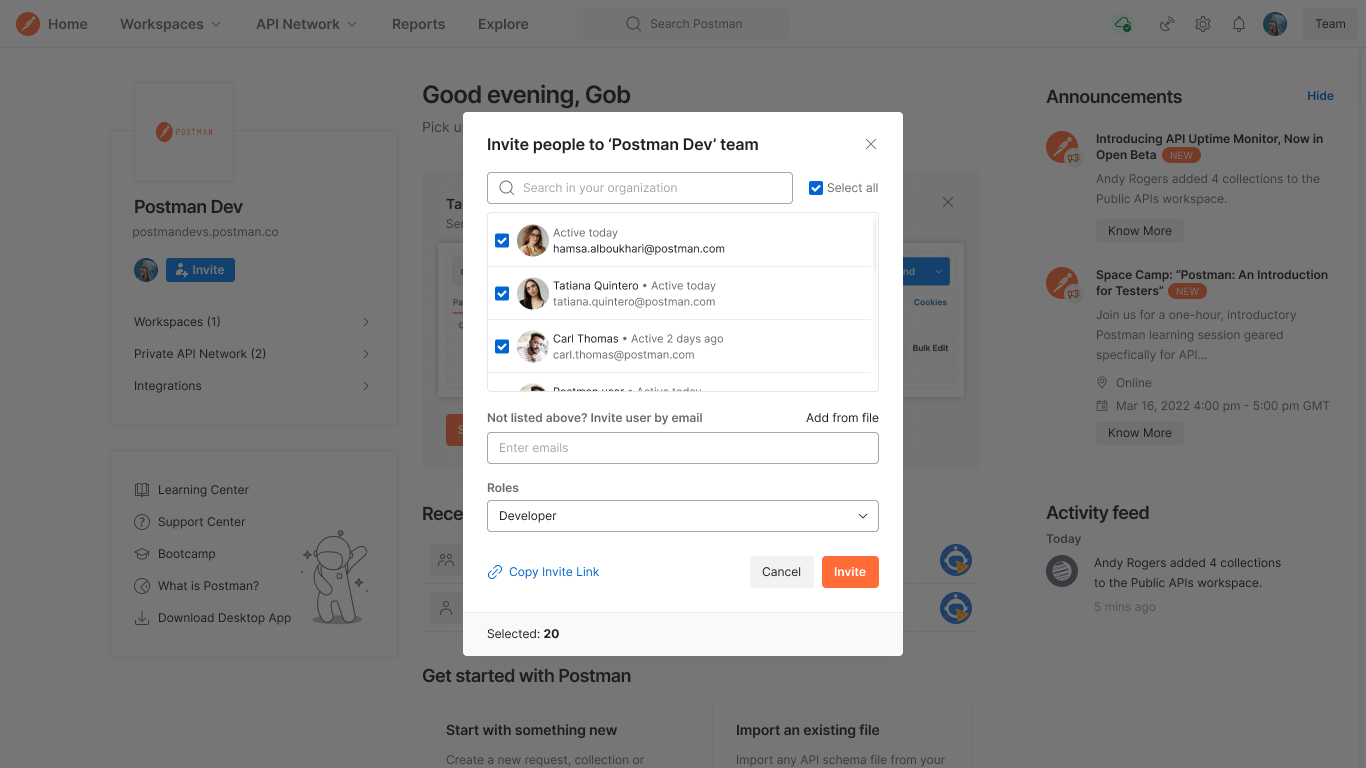
To gather more signal on user behavior I opted for a multi-variant A/B test. This would let us understand whether users engaged with the full modal, whether they preferred recommendations, and whether the UI itself drove more invites and acceptances.
Variant A
Variant B
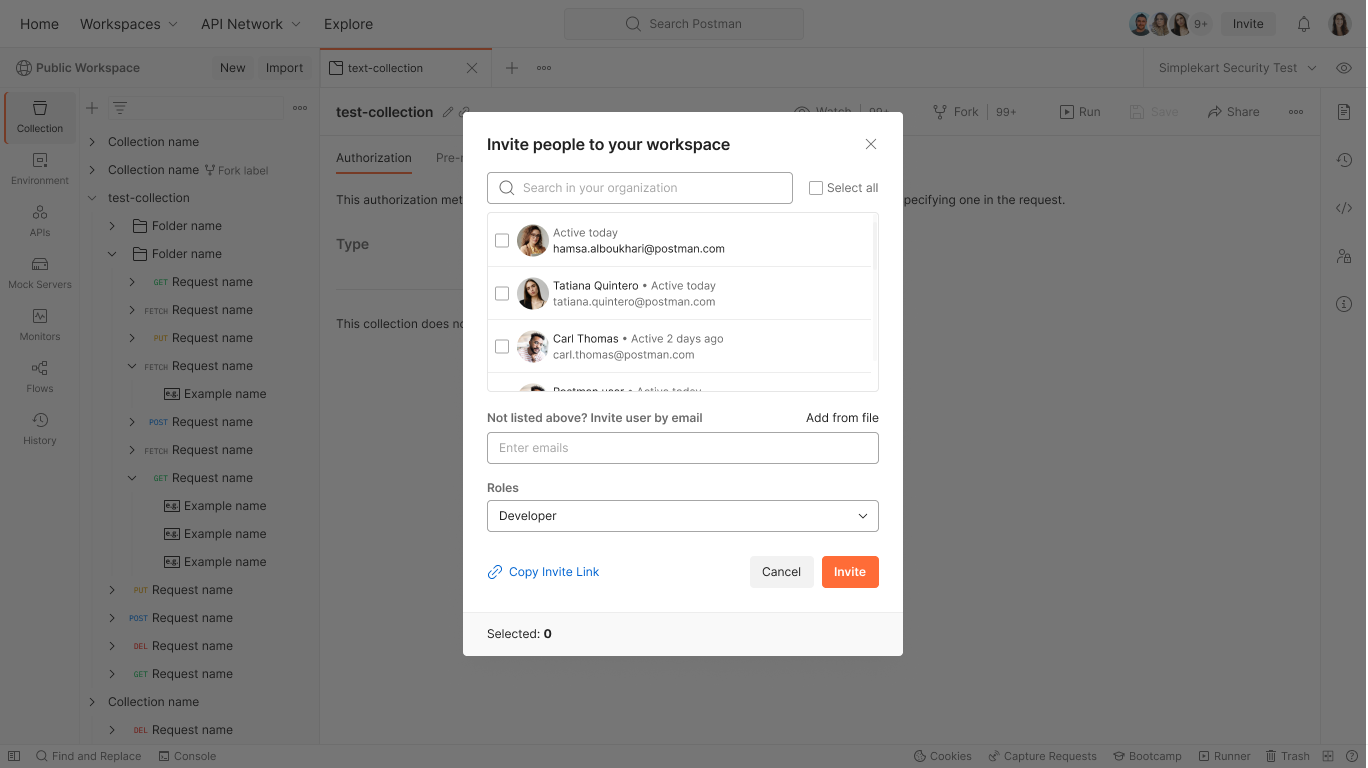
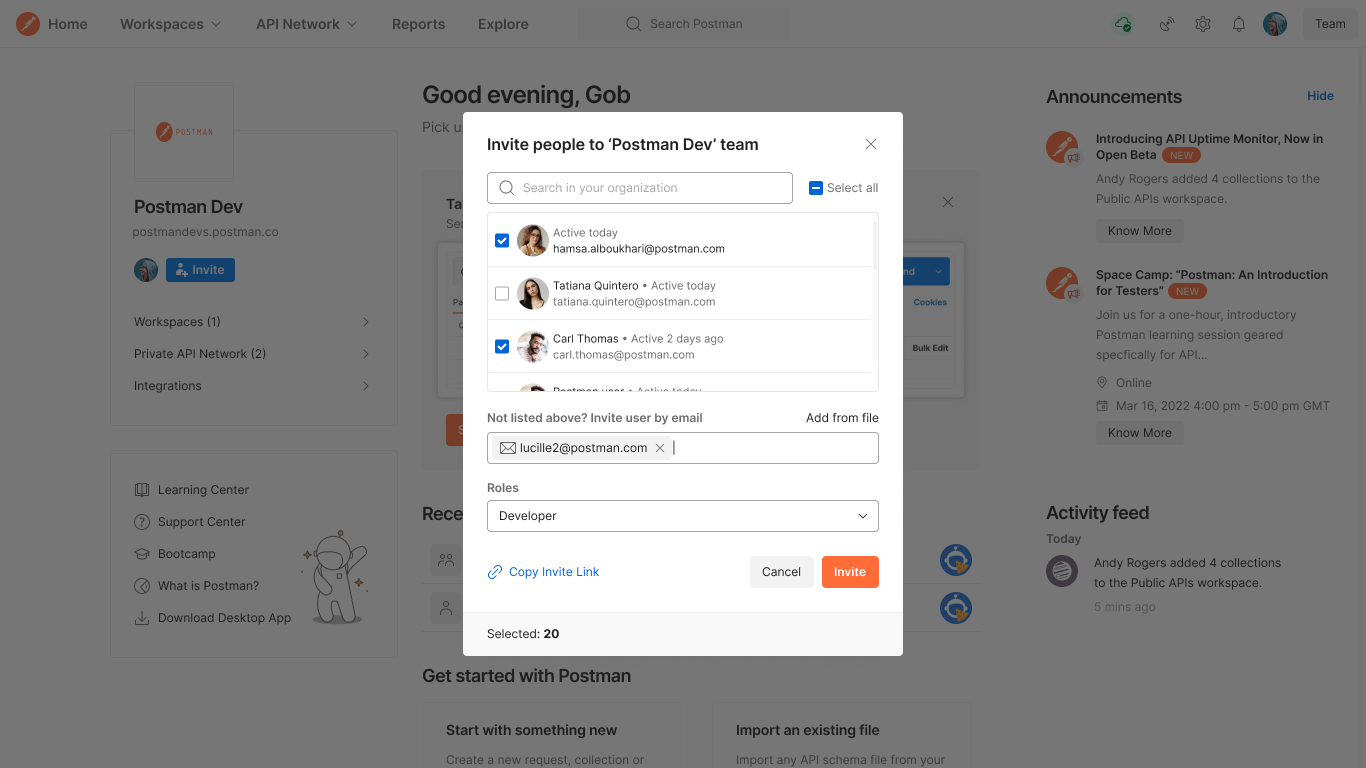
Flow A: Inviting teammates within your company's domain
To walk through a full flow, lets take a hyper focus of Variant A. I chose this based on how it engaged with users and the data that was found post experiment.
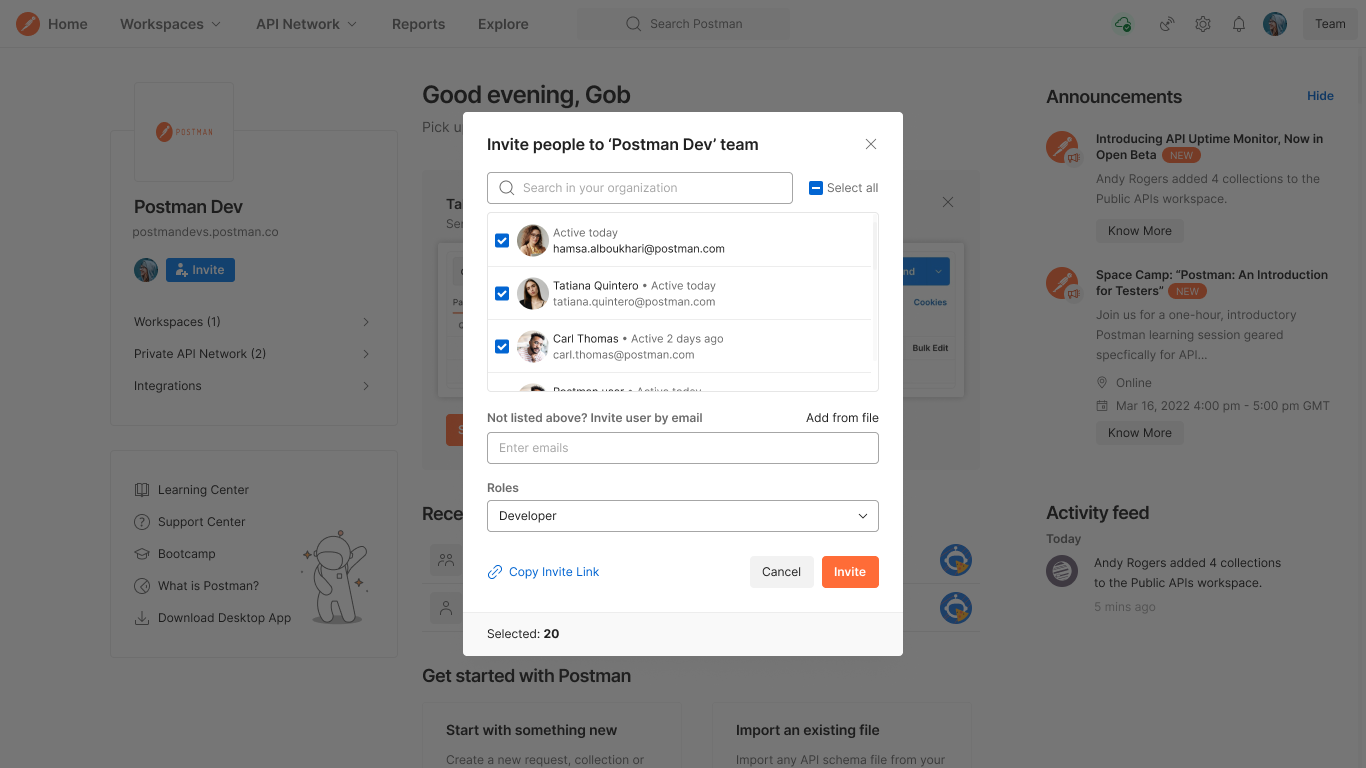
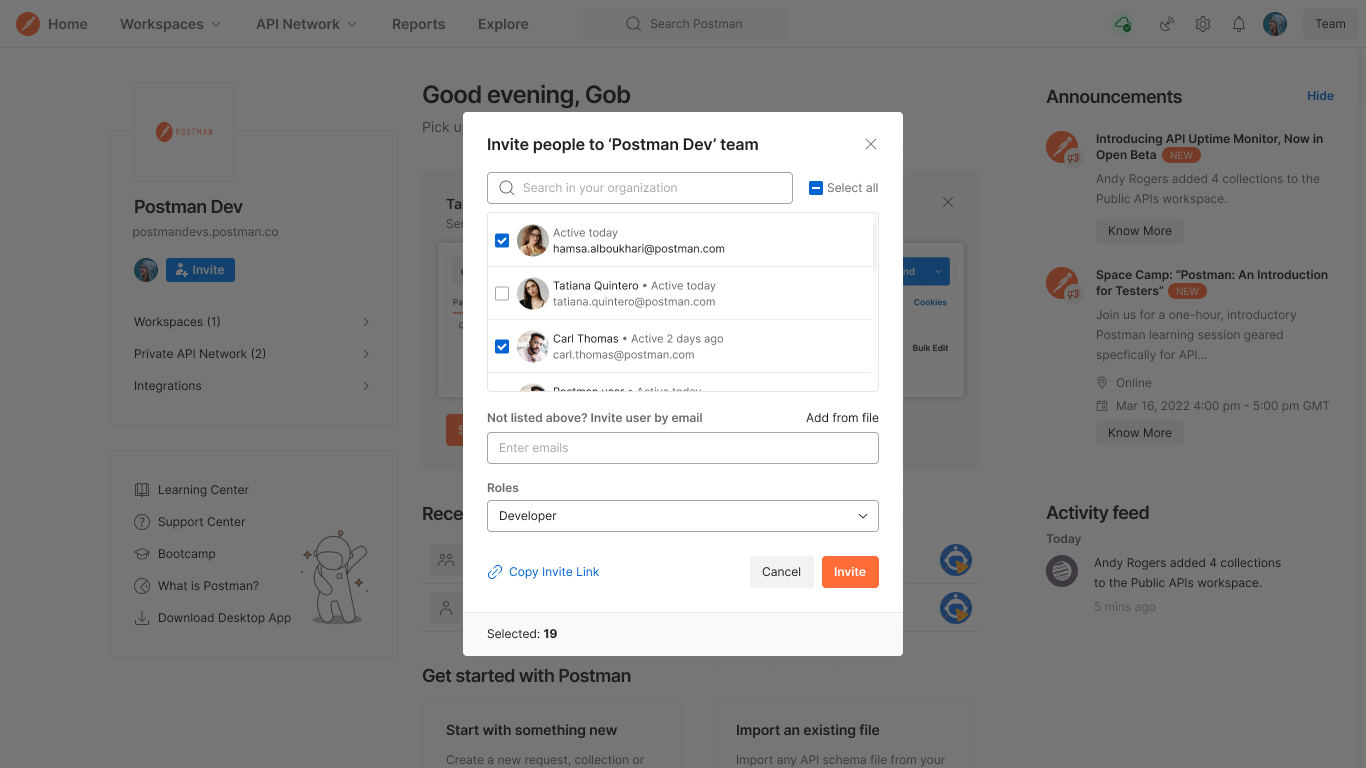
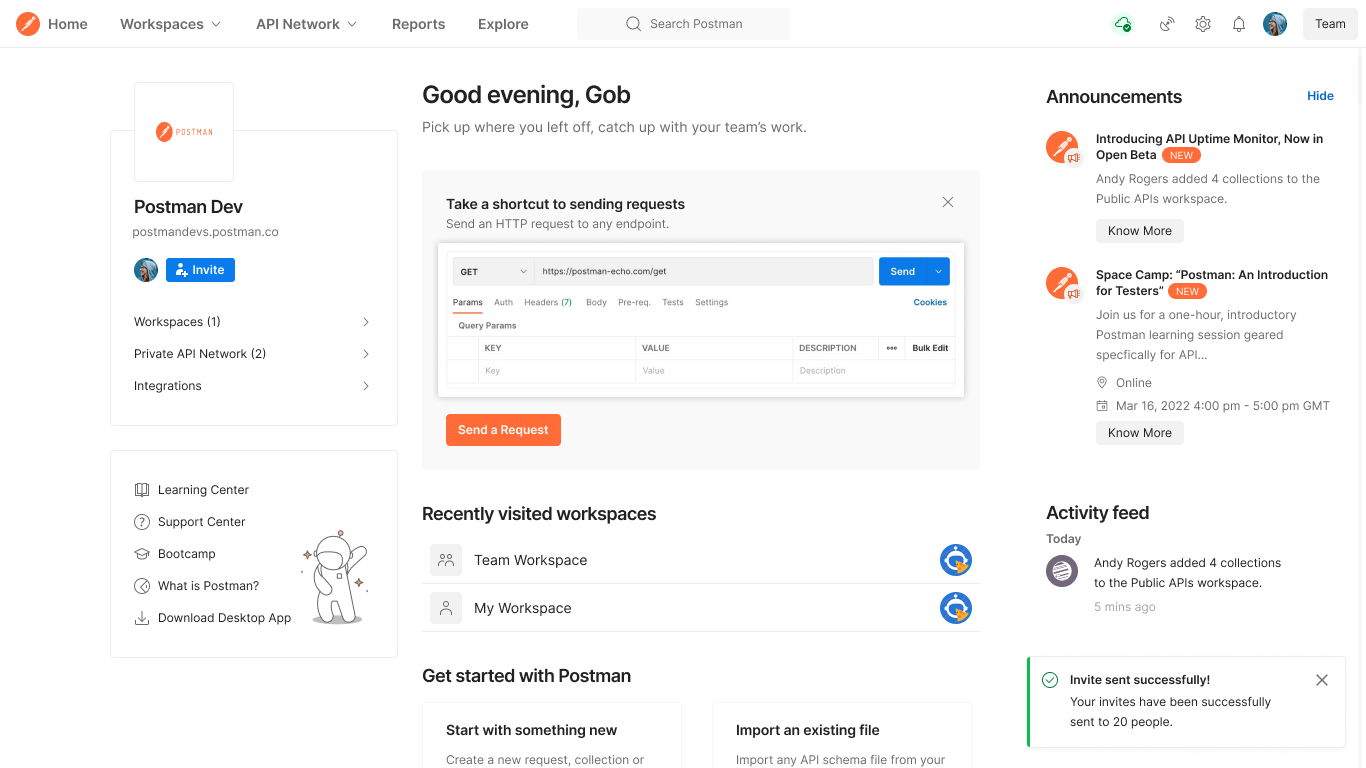
This flow shows how a user can invite coworkers, within their domain, to their team. The main change is domain visibility through a searchable list. The user would be able to select multiple as well as invite people from outside of their domain. This approach was much more streamlined and focused on in domain collaboration.
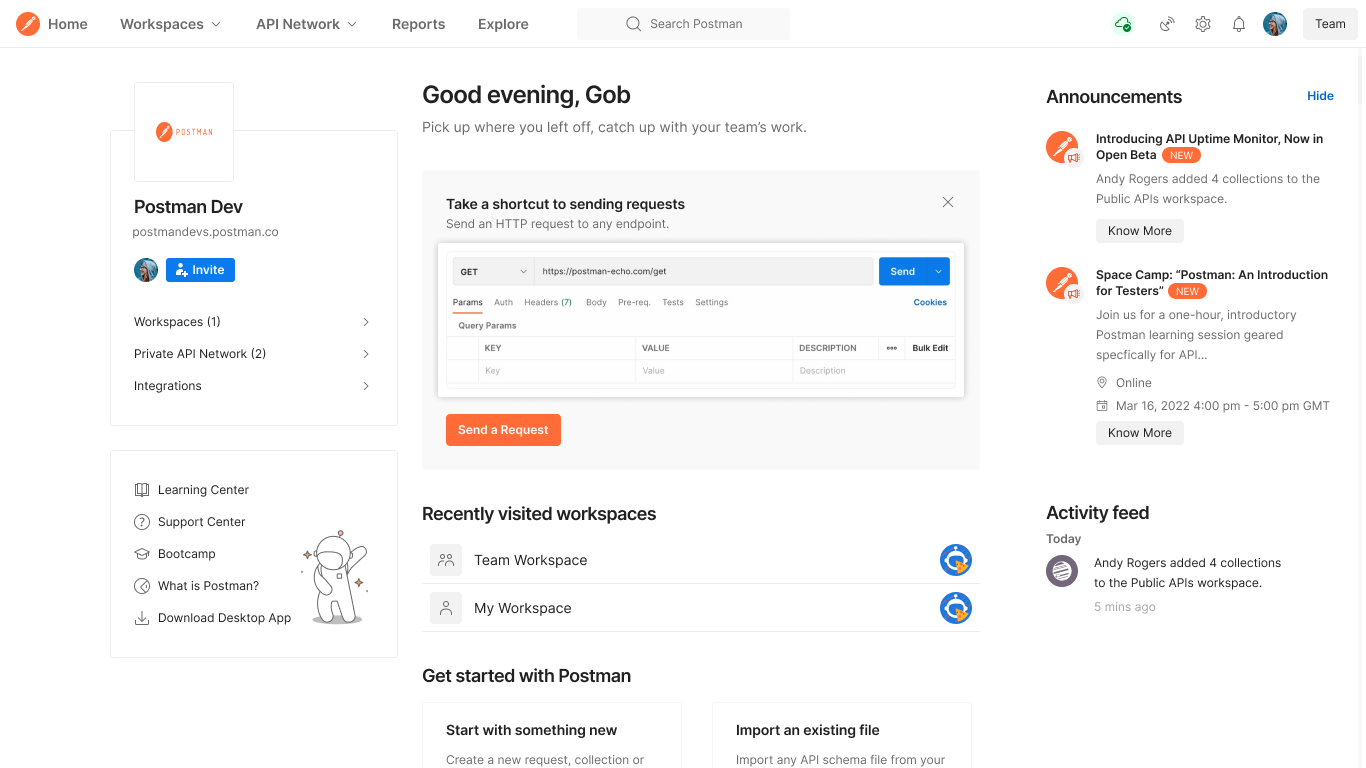
Experiment Results
The experiment ran August 9 through September 9, 2022. Results were clear: the change in inviting significantly outperformed the previous experience.
Road to GA
With strong experiment results, the focus shifted to preparing for a full rollout:
Original
New
Learnings
The biggest insight was that visibility alone was enough to change behavior. Users didn't need to be told to invite more people. They just needed to see who was already there. Surfacing domain members inside the flow removed the barrier of recall and made collaboration feel low-effort rather than manual.
The multi-variant test was the right call. We learned that defaulting to 'select all' felt presumptuous and actually hurt acceptance rates, even though it drove more invites. The distinction between invite volume and invite quality became a key finding that shaped how we approached the next round of experiments.
This project becoming the highest-impact Growth initiative of 2022 validated the hypothesis that small UX changes in the right place, specifically at the moment a user is already motivated to invite, can have outsized business outcomes. It set the playbook for how the team approached collaboration experiments going forward.