Azure SQL Resources & Pricing
Making complex pricing tiers and resource configuration legible for enterprise buyers.
Lead UX Designer · Spring 2017
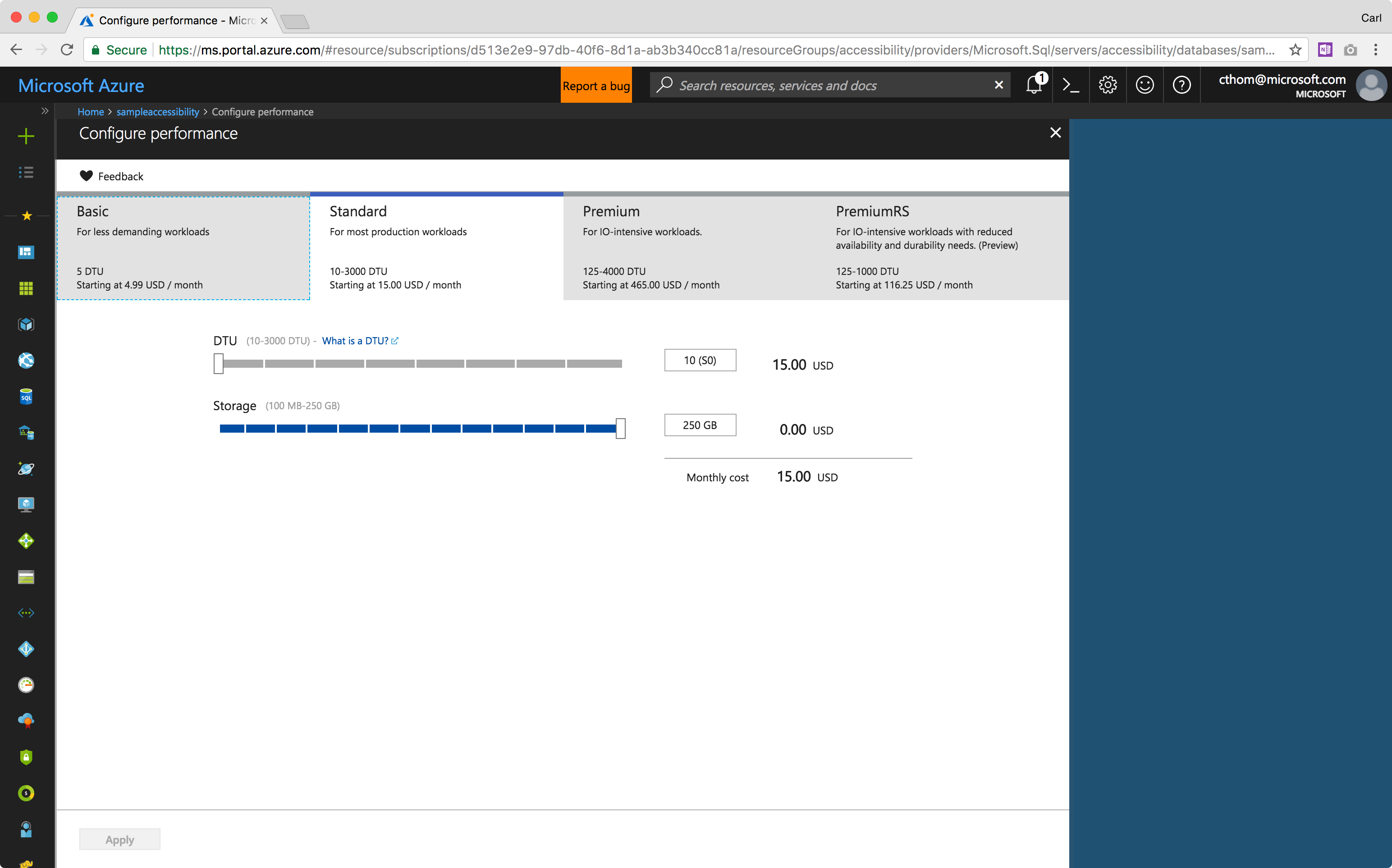
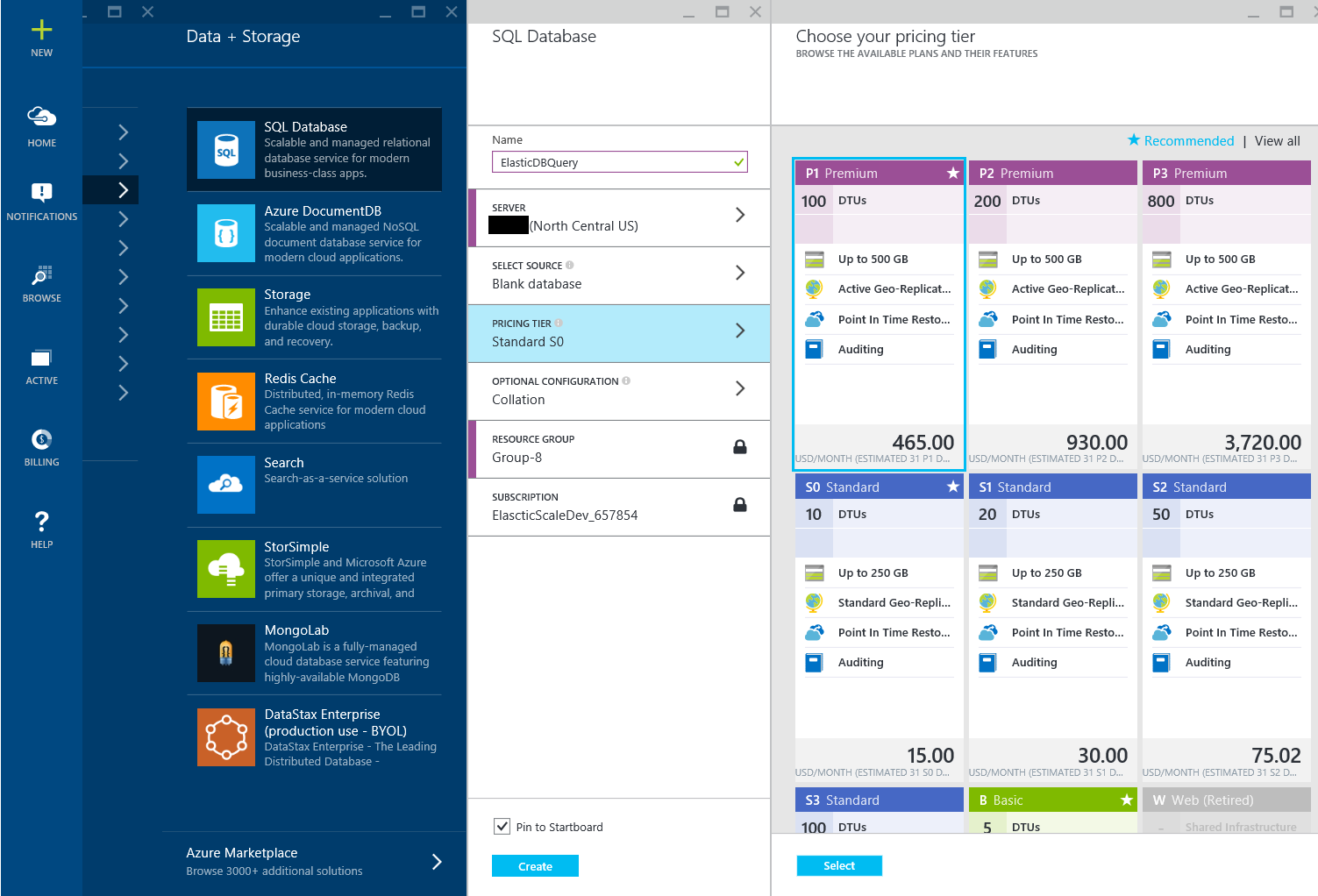
Azure SQL database pricing used a card-based model that confused customers and made scaling decisions feel opaque. Users couldn't understand the relationship between pricing tiers, couldn't visualize what they were getting, and had no intuitive way to control resource allocation. As UX Design Lead I redesigned the pricing and resource configuration experience to make tiers and customization feel legible and controllable.
Key Problems
The Solution
The redesign introduced a two-concept model: Tier for selecting storage type and database class, and Customization for fine-tuning resource allocation within that tier. This framing gave customers a mental model that matched how they actually thought about their workload, making the tradeoffs between levels immediately clear.
Before
After
Outcomes